
Root Canal Therapy
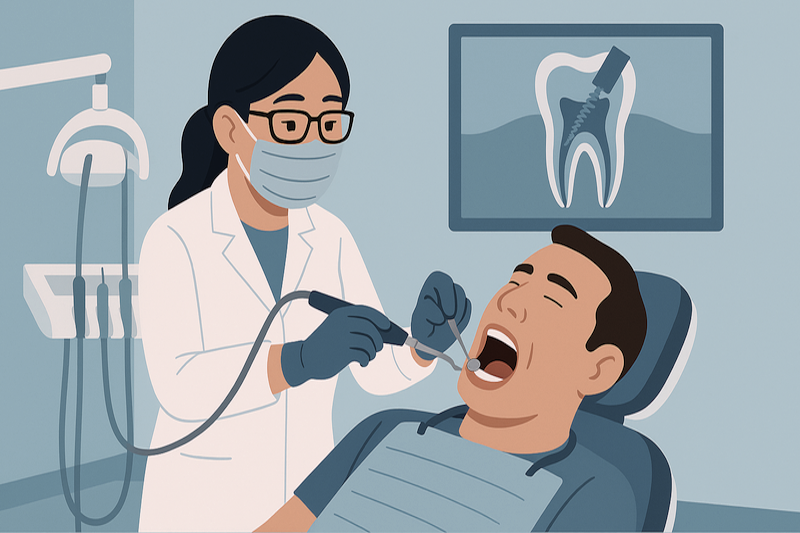
Saving Your Natural Tooth with Root Canal Treatment
A root canal, also known as an “Endodontic procedure,” is necessary when deep decay reaches the tooth’s nerve, causing persistent pain, or when the tooth requires structural support for a crown. A tooth has three layers: enamel (outer), dentin (middle), and the pulp chamber (inner nerve). When decay penetrates to the pulp, the nerve can become infected, risking tooth loss.
During the procedure, the area is numbed, and the infected nerve tissue is carefully removed from the root canals to save the tooth from extraction. The canals are then cleaned and filled with a nonreactive material called gutta-percha.
Restoring and Maintaining Your Treated Tooth
After the root canal is completed, the tooth is nerve-free and needs to be restored. Typically, a crown—and in some cases, a post and crown—is placed to protect the tooth from further decay, fracture, or chipping.
When done properly and followed by timely restoration, a root canal can offer excellent long-term results. With consistent oral hygiene and regular dental visits, your treated tooth can remain strong and functional for many years.